
That Rotten Egg Smell in Your Water: What Causes Sulfur Odor and What You Can Do About It
- Apex Water Treatment
- Jun 29
- 2 min read
Updated: Jul 2
The smell is unmistakable. The good news is it's fixable.
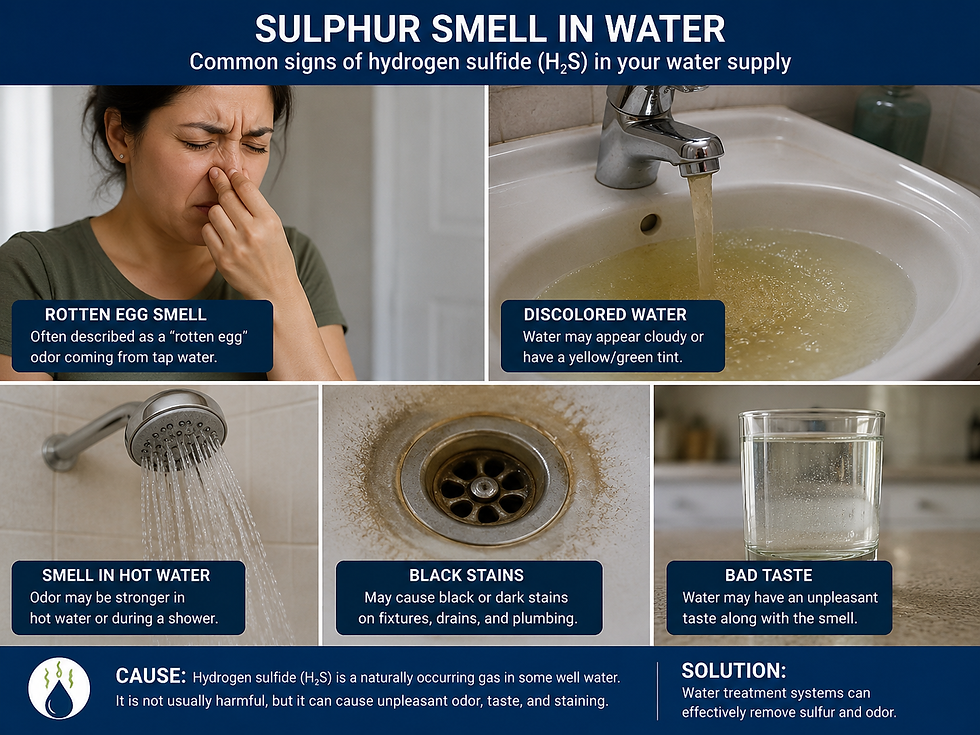
You turn on the water and it hits you immediately — that unmistakable rotten egg smell. It's one of the most common complaints we hear from well water homeowners in Central Florida, and it's also one of the most unpleasant. The good news is that sulfur odor in water is a well-understood problem with proven solutions. The first step is understanding where it comes from.
What Causes the Sulfur Smell?
The rotten egg odor in water is caused by hydrogen sulfide gas. It occurs naturally in some groundwater sources, particularly in areas with high organic matter or certain types of rock formations — both of which are common throughout Florida's aquifer system. Hydrogen sulfide can also be produced by sulfur bacteria, which thrive in low-oxygen environments like the inside of a water heater or a well casing.
In some cases the smell is present in both hot and cold water, which suggests the source is in the well or the water supply itself. In other cases the smell is only noticeable in hot water, which typically points to a reaction happening inside the water heater — often related to the heater's magnesium anode rod interacting with sulfur-reducing bacteria in the water.
Is Sulfur Water Dangerous?
At the levels typically found in residential well water, hydrogen sulfide is generally not considered a health risk. However, at higher concentrations it can be corrosive to pipes and fixtures, and it almost always makes water unpleasant to drink, cook with, or bathe in. Sulfur bacteria, if present, can also contribute to iron bacteria problems and cause slime buildup in pipes and fixtures.
What's the Solution?
Treatment depends on the source and severity of the problem. A water test is the essential first step — it tells us the hydrogen sulfide level, whether bacteria are present, what the pH is, and what other conditions in the water might affect treatment options.
Common approaches include aeration systems that expose the water to air and allow the gas to escape, oxidizing filters using media like manganese greensand or catalytic carbon, and chlorination or peroxide injection systems for more severe cases or where bacteria are involved. For isolated water heater odor, adjusting or replacing the anode rod and flushing the tank may resolve the issue without a full treatment system.
Every situation is a little different, which is why we never recommend a solution before we understand the water. If the rotten egg smell has become a fact of life in your home, it doesn't have to be.
Reach out to Apex Water Treatment at 321-323-6512 or contact us online. A free water test is the first step toward water that actually smells — and tastes — the way it should.
Comments